HMDD Collaborations and Their Significance for the Brand’s Identity
HMDD, short for Happy Memories Don’t Die, has built its name on a philosophy rather than a logo. The brand treats clothing as a vessel for nostalgia, and every collaboration it enters becomes a test of whether that idea can survive contact with another creative voice. When two brands merge visions, one of them usually bends. With HMDD, the bending tends to happen carefully, because the phrase «happy memories don’t die» is not just a tagline — it is the entire reason customers return. Collaborations force the label to answer a harder question than «what does this look like?» It has to answer «does this still feel like us?» That tension is exactly why HMDD’s partnerships matter more than a typical streetwear crossover.
A large share of fashion joint projects serve mostly to borrow attention. A smaller label links up with a bigger name, enjoys a surge in traffic, and calls it done. HMDD’s approach feels different in reality. The brand usually choose partners who from the outset share an emotional register — somber, memory-driven, understatedly rebellious — rather than pursuing the most attention-grabbing option out there. This careful curation shapes how the brand identity holds together across drops, and it’s useful to break down one element at a time.
Partnerships as a Litmus Test for Core-Identity: Explaining Why It Matters
Maintaining a brand’s identity is easiest when it operates without partners. Every fabric choice, every graphic positioning, every fit decision stays inside one team’s control. Compromises start piling up as soon as a new creative partner joins the picture. Around specific signals — distressed graphics, oversized silhouettes, and text treatments that reference memory, loss, and time — HMDD clothing has forged its identity. A co-creator with a sleeker, sales-driven sensibility could all too easily reduce those signals into a watered-down version.
It is here that restraint turns into a tactical advantage. Reports and reviews from hmdd cargo pants the HMDDLA community time and again note that partnership drops keep the brand’s signature aesthetic fingerprint — matching material weight, the same lived-in print method, matching sentimental wording on labels and inserts. That consistency isn’t accidental. It points to an internal rule: collaborators may shape color or silhouette, but the underlying emotional thread remains unaltered.
Consider the alternative. If HMDD released a collab hoodie with bright, glossy branding and zero reference to its usual themes, longtime buyers would notice within seconds. The brand’s audience isn’t drawn in by trend-chasing; they’re drawn in by specificity. A single misstep — one collection that feels like merchandise rather than memory — could cost more trust than any short-term sales bump would repay.
Discovering Through Joint Projects What HMDD’s Own Stylistic Identity Really Means
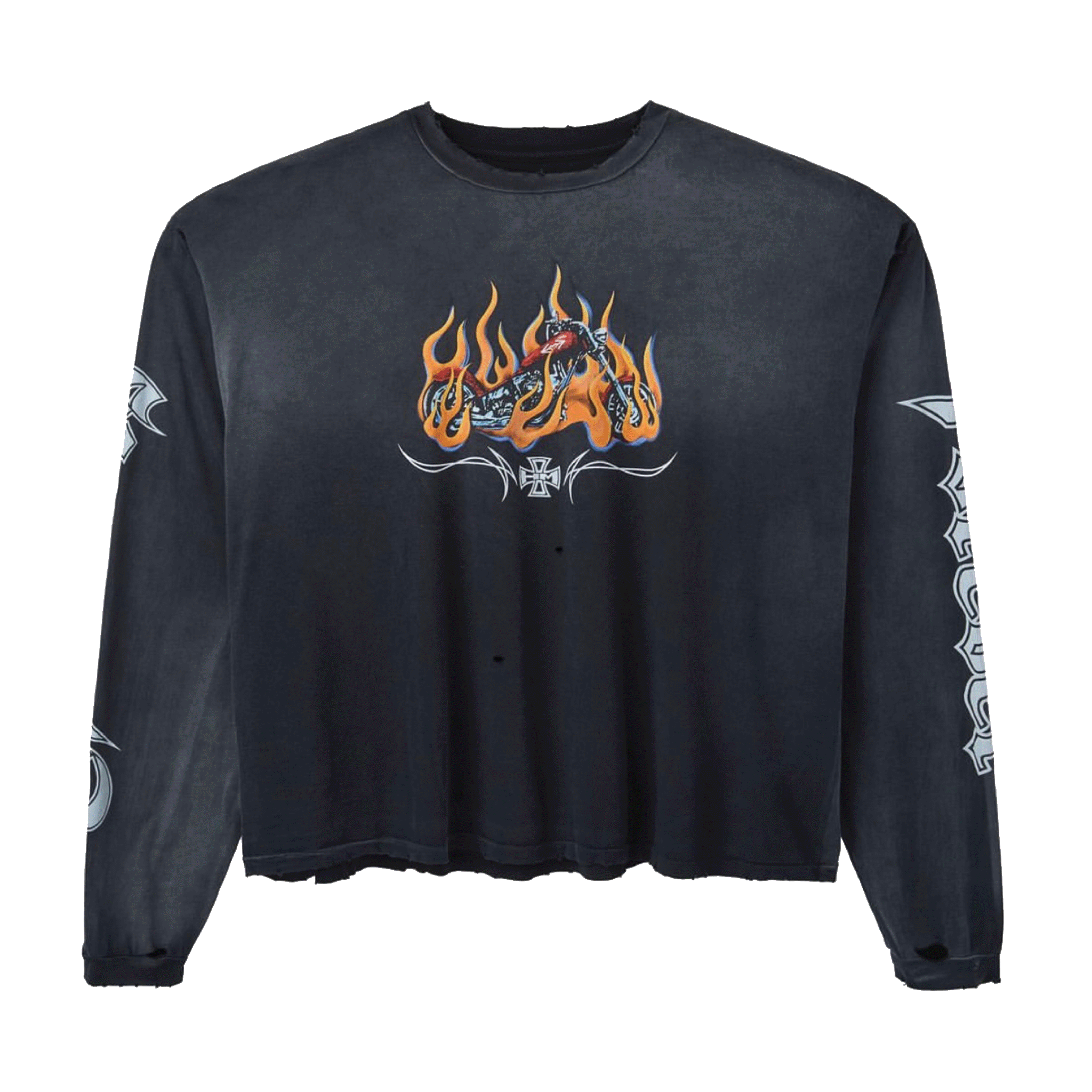
Every joint release serves as a lens on stylistic tendencies that might otherwise go unremarked. Any time HMDD partners with someone outside the brand, a few recurring traits resurface across nearly every release: substantial cotton fabrics (commonly in the 280–400 GSM range for hoodies and sweatshirts), boxy silhouettes, and manually worn-in or overdyed finishes that impart each piece a worn-in quality rather than a factory-fresh one. HMDD’s sweatpants line makes the pattern most obvious — an easy, tapered fit, elasticated rib endings, and a material feel that favors softness over sharp tailoring.
HMDD shorts follow a similar logic. Rather than letting shorts play second fiddle, HMDD extends the matching distressing techniques and lettering styles seen across jackets and hoodies, which keeps a entire seasonal release feeling cohesive instead of disjointed. That consistency across categories — hoodies, sweatpants, shorts, tees — is part of what makes people search specifically for «best hmdd clothing» rather than settling for a run-of-the-mill streetwear option.
- Material density stays thick and solid, even in summer-suited pieces like shorts.
- Lettering relies on scrawled or weathered-stencil styles instead of clean sans-serif labeling.
- Color palettes favor faded blacks, muted greys, and subdued natural tones over bold, punchy hues.
- Visuals reference recollection and fleetingness rather than straightforward branding.
When a collaborator enters this world, they’re essentially asked to fall in line with HMDD’s aesthetic instead of pushing their own style. It’s a bigger demand than it seems, and that’s the reason not every proposed partnership reaches the shelf.
The Business Logic Behind Selective Partnerships
Streetwear economics favor limited supply while penalizing overexposure. A brand that collaborates with everyone eventually collaborates with no one memorably. HMDD’s release cadence appears to favor scarce production numbers and infrequent collaboration drops instead of a nonstop flow of co-branded goods. This rhythm serves a double purpose: it protects perceived exclusivity, and it allows the design team the time needed to ensure each collaboration still reads as unmistakably HMDD.
Worth noting too is the pricing strategy at play. Streetwear collab items usually cost more than regular catalog pieces — frequently 15–30% above baseline — owing to increased production difficulty, restricted quantities, or dual-brand costs. Customers researching an «hmdd review» before buying often flag price-to-quality ratio as a deciding factor, so a collaboration that hikes the price but not the perceived skill behind it is more likely to draw complaints than compliments.
That’s the reason the savviest fashion joint ventures operate more as shared research-and-development efforts than promotional gimmicks. Two teams pool techniques — maybe one contributes a dye process, the other contributes a silhouette — and the outcome ought to seem deserved instead of hastily assembled. Should that balance hold, both audiences convert into fans of the other brand. When it fails, neither group of followers feels prioritized.
Evaluating Various Approaches to Collaboration
To get a sense of where HMDD stands relative to common streetwear collaboration approaches, it helps to look at a few common approaches used across the industry in 2026. The chart that follows breaks down three overarching collaboration models seen in the larger streetwear market, not tied to specific named partners.
| Partnership Approach | Primary Goal | Standard Batch Size | Danger to Brand Voice |
|---|---|---|---|
| High-frequency co-branding | Boost exposure and foot traffic | Sizable, repeated batches | High — identity weakens with too much visibility |
| One-off hype drop | Short-term sales jump | Very limited, one-time run | Moderate — effect fades once trend passes |
| Carefully-chosen, values-aligned partnership (HMDD’s usual pattern) | Solidify core identity while connecting with adjacent audiences | Restrained, rare | Minimal — collaborator adapts to brand language rather than overriding it |
It’s in that third category that HMDD’s partnerships tend to settle. The brand doesn’t appear interested in flooding release calendars with co-branded product. Rather, each partnership looks crafted to answer a distinct creative question — a new fabric treatment, an untried color palette, a different take on distressing — while leaving the emotional core of «happy memories don’t die» wholly undisturbed.
What This Means for Shoppers in 2026
If you’re stacking HMDD up against other emerging streetwear brands this year, collaborations offer a useful litmus test. If a co-branded item still feels distinctly HMDD — same fabric weight, same worn typography, same emotional resonance — it’s a clear sign the brand’s identity is resilient enough to survive growth. If later drops start blurring into whoever’s name is attached, that would be a warning sign worth monitoring.
Anyone looking into HMDD sweatpants, HMDD shorts, or a collaboration release should take note of a few concrete details before buying: fabric weight specified in the product description, whether sizing runs standard-fit or intentionally oversized, and whether the piece is part of a serialized or limited run. These details matter more in collaboration releases than in routine catalog drops, since collaboration pricing tends to run higher and expectations increase accordingly.
At the end of the day, HMDD’s collaborations act as identity checkpoints rather than pure marketing events. Every partnership tests whether HMDD can expand its audience without sacrificing the distinct, nostalgia-driven feel that earned it a following in the first place. Thus far, the trend hints at a brand prioritizing the protection of its voice over chasing all available attention — and for a label built completely around emotional resonance, that discipline may be its most valuable asset heading further into 2026.